PageContent
Belly Button Piercing Guide: Everything You Need to Know
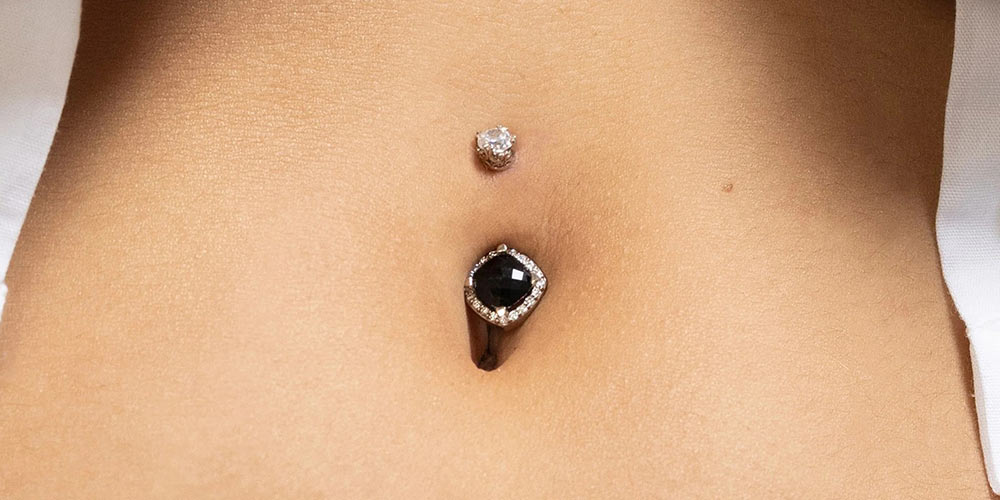
You may be thinking about getting a belly button piercing but haven’t taken the plunge because you don’t know where to start. Here’s all the information you need to know so that you are well-informed and feel confident when you finally pierce your belly button.
You're Getting Your Navel Pierced, Here's What You Need To Know
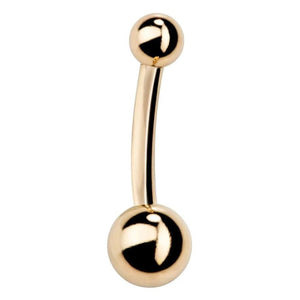
1. Most belly button piercings are done with a curved barbell preferably made of 14k gold, 18k gold, or high-quality titanium.
2. The standard size for a navel piercing is 14 Gauge (aka 14G). You should never use a barbell thinner than 18G since a higher gauged needle presents more risk of rejection, tearing, and migration.
3. The length of your first barbell will likely be 7/16-inch to allow for extra room for your piercings to heal and be easily cleaned. You can change the size later. (Healed belly button piercings typically use 3/8-inch (8mm) jewelry.)
4. During healing, protect your navel piercing from being snagged on clothing, irritated from friction, or injured during physical sports and activities with this simple tip: get a vented eye patch of hard plastic (found at most pharmacies), and secure it over your piercing using adhesive tape.
5. Follow a daily cleansing routine for your new navel piercing.
6. Don't change out your belly button ring until it has completely healed.
How much does the belly button piercing hurt?
Since the skin around the navel is quite fleshy, belly piercings hurt less than other piercing types, like cartilage piercings. However, you are receiving a puncture hole, so there will be some pain involved.
Most claim that the navel piercing pinches similarly to an immunization. If you don’t have problems getting shots, then you should be fine. The good news is that the process is quick, and any initial piercing pain will be brief.
In the days after you receive your belly piercing, you’ll most likely feel some discomfort, including swelling, throbbing, and some aching. This is normal. If the piercing pain becomes too much to bear, speak to a medical professional.
Navel piercing healing process
The navel piercing takes some time to heal. In a matter of weeks, it will appear healed, but it takes between 3 to 6 months for the piercing to heal internally. During that time, you need to keep up aftercare practices, including avoiding swimming. In some cases, it takes up to a year to completely heal, so make sure to talk to your piercer before stopping aftercare practices.
Aftercare rules
The navel piercing adheres to standard aftercare practices, but since it’s located on the body, there are certain things that you must keep in mind as it heals.
Stay away from the beach. Warm areas are where belly piercings shine. However, while it’s healing, you need to keep it away from pools, standing water, sandy areas, and anywhere that might bring in harmful bacteria. Sandy beaches can bring foreign particles into the piercing, which could cause infection. Opt to sit by the pool instead (but don’t go into the water until you’re fully healed).
Make sure your initial jewelry is the right size. Rejection and migration can occur in any piercing, but it seems to be relatively common in the navel piercing. Rejection can happen for many reasons—such as using cheap metal for your jewelry—but often it comes down to the size of your jewelry. Make sure that your barbell is long enough to leave room for swelling and small enough that the weight of it won’t pull on your piercing. Wait to opt for dangle belly button rings until your piercing is fully healed. If you suspect that you’re rejecting the jewelry, visit your piercer as soon as possible so that they can give you options. Rejected jewelry is rarely life-threatening, but it will leave permanent scars.
Conduct a saline soak or salt bath daily. The location of the navel piercing makes it difficult to keep clean, but there is an easy solution to this. Either mix your own sea salt solution—it’s imperative that you make sure that the solution is properly mixed, uses only distilled water and non-iodized salt, and is stored in a sterile environment—or purchase a piercing aftercare saline solution. Put the solution in a small paper cup, large enough to accommodate your belly button jewelry, lean over the cup to dip your piercing inside, and press the rim of the cup to your belly, suctioning the cup to your body. For the duration of the 5-minute soak, you can then (carefully) move around with the cup on your belly.
Be careful with your clothing. New belly jewelry is so easily snagged. A massive snare could rip the jewelry completely out of your belly button. Even small snags shouldn’t be ignored; habitual tugging at the jewelry could cause hypertrophic scarring or other complications that will affect you long term. Choose clothing items with few things to snag on. Make sure you wear baggier clothing that won’t press or tug at the jewelry. If you’re concerned, you can always cover the jewelry with a large bandage to avoid snagging during healing.

How much will it cost?
A belly button piercing will cost anywhere between $30 and $70. As with any piercing, opt for experience over price. Never choose a piercer who uses a piercing gun. With belly piercings, it’s important that your piercer understands the correct jewelry size to use in order to avoid rejection, so it’s important that you choose an expert piercer.
Belly piercing variations
You might think that the belly button piercing is pretty straightforward, but there are variations to this popular piercing.
The bottom belly button piercing pierces the skin below the belly button, rather than above. This piercing is great for those who would prefer jewelry that hangs lower than the standard belly piercing.
The double belly button piercing allows for a bit of variety. Essentially, it consists of an additional piercing either above, below, or to the side of your belly button piercing. Vertical double piercings seem to be the most popular. The vertical double belly piercing consists of a regular belly piercing and the bottom belly button piercing. You can choose a standard belly ring for each piercing, creating an alluring aesthetic. You can also get creative with charms and dangles to create a stunning cascading effect.

Your Piercing Is Healed. Time To Shop For A New Belly Ring!
You followed all the advice and your piercing is fully healed—now you can focus on choosing jewelry that actually looks good and feels right.
Sizing still matters (even after healing)
Remember sizing? It doesn’t stop being important once your piercing heals.
- Standard gauge: Most navel piercings use 14G
- Typical length: The most common bar length is 3/8" (8mm)
But “standard” doesn’t mean universal.
Because navel piercings vary more than most, the correct length depends on your anatomy and how your piercing sits.
- Shallower piercings: often need shorter bars (5/16" / 6mm)
- Deeper piercings: may need longer bars (7/16" / 10–11mm)
Wearing the wrong length is the #1 cause of discomfort, irritation, and migration.
Choosing the correct size ensures your jewelry sits comfortably and stays in place for everyday wear.
A note on quality
If you want a healthy, long-lasting piercing—and jewelry you’ll actually enjoy wearing—material quality matters.
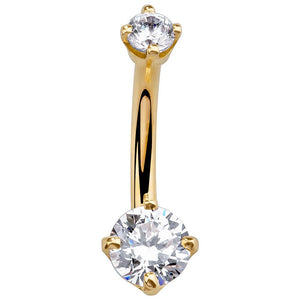
Our belly rings are made from hypoallergenic solid 14k gold, which is nickel-free. Nickel is the most common cause of irritation, so using high-purity materials like gold or platinum reduces the risk of reactions and improves long-term comfort. For heirloom-quality pieces featuring conflict-free stones and custom settings, explore our diamond belly rings collection.
But material is only part of the equation. Unlike mass-produced jewelry, our pieces are made to order based on your selected size, so you’re not forced into a generic fit. Combined with high-quality materials, this results in jewelry that sits correctly, feels comfortable, and is designed for continuous wear.
Investing in a solid gold belly button ring means:
- Fewer reactions
- Better comfort from both material and fit
- Jewelry that holds up to daily wear
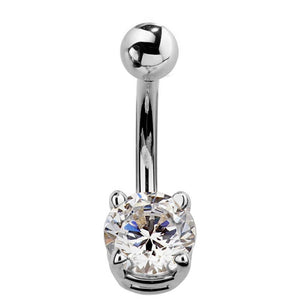
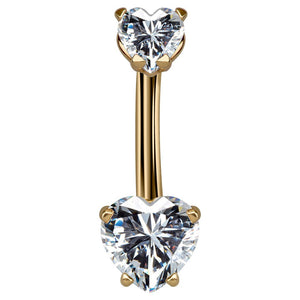
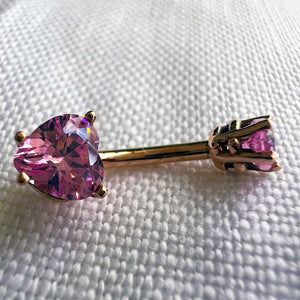
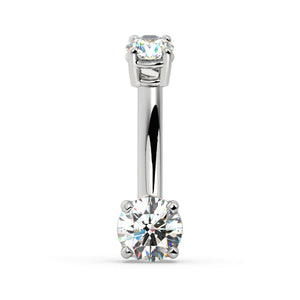
Bespoke Belly Rings
Daily wear vs. occasion wear
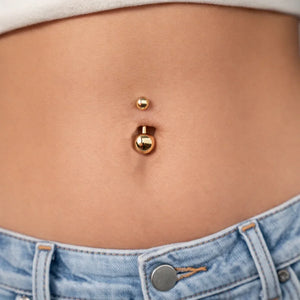
For everyday comfort, stick with simple curved barbells or belly button hoops — they sit flat, resist snagging, and are safe to wear around the clock. Save elaborate dangle and chandelier styles for nights out and daytime events where you can keep an eye on them. Never sleep in long dangle belly rings; they can catch on sheets and cause hypertrophic scarring or tear the piercing.
Fast Facts
Choosing the Right Type of Navel Jewelry
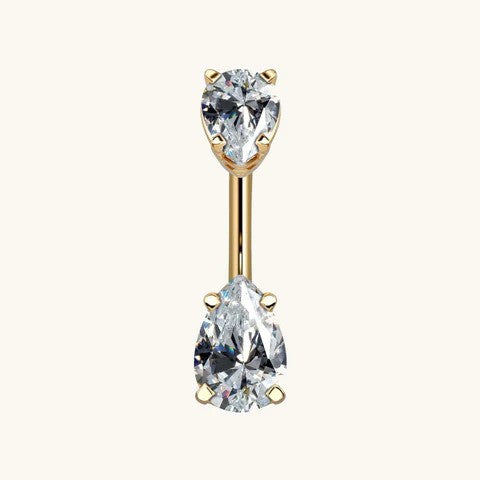
Non-Dangle Belly Rings
These belly rings range from basic to fabulous. Made from a variety of materials, they can be adorned with sparkling gemstones, elaborate designs, etc. They are no less stunning than their dangling counterpart. The more basic of these pieces are great for everyday wear.

Floating Navel Rings
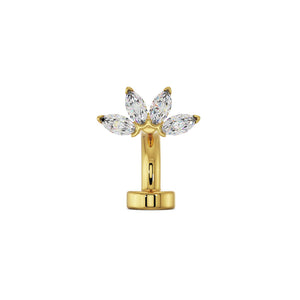
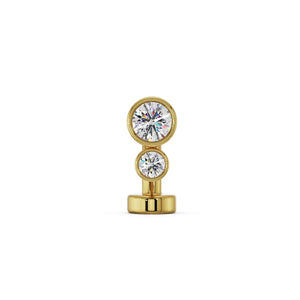
These rings create a sleek, floating effect above or below your belly piercing, secured by a discreet flat disk backing. The charm takes center stage, offering a stylish and eye-catching look.

Dangle Belly Button Rings
Similar to the non-dangle belly rings, they have one difference: interesting charms that move about when you wear them. Again, they can range from simple to elaborate.
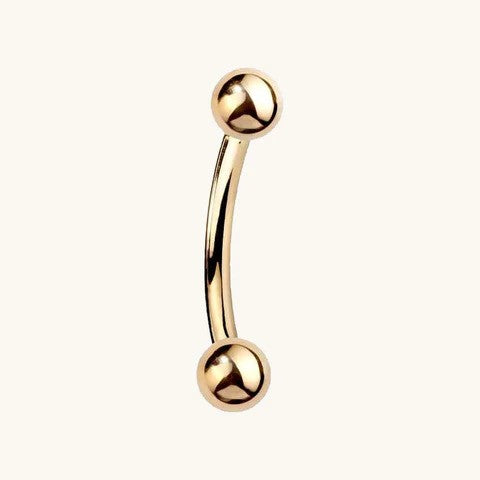
Curved Barbell
The most common type of navel jewelry, this versatile look comes in a huge variety of styles.
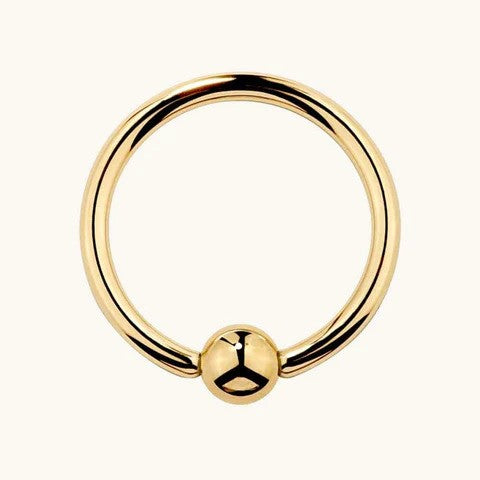
Captive Bead Rings
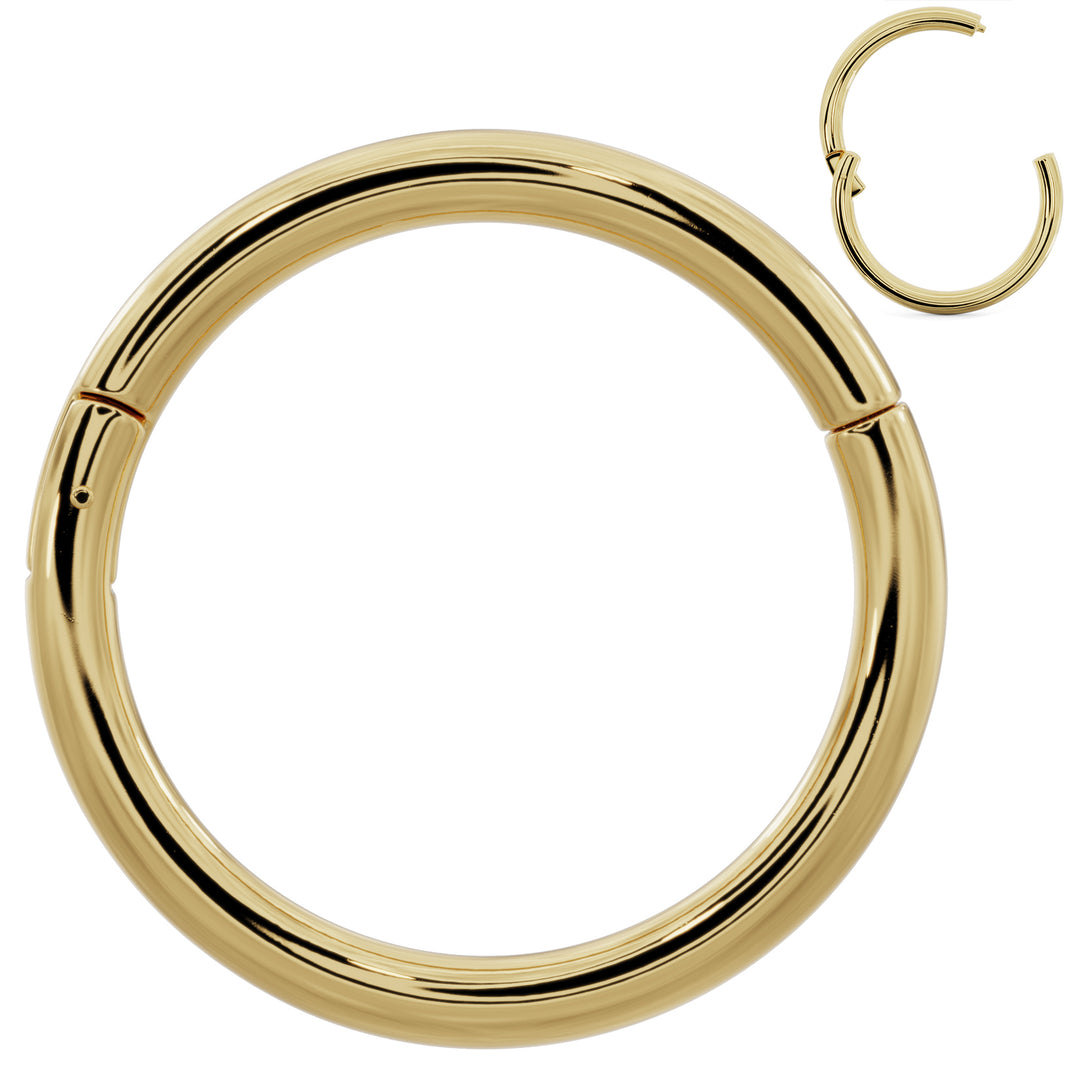
These hoops are great for an understated, simple look.
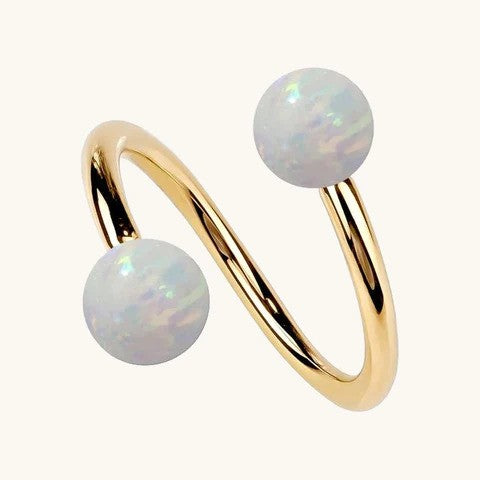
Twister Spiral Belly Rings
The name of these belly rings says it all. They are a twisted spiral that you thread through your piercing and secure with a screw-on ball. They come in a range of lengths. You can also wear smaller twist jewelry in other areas of the body, such as the ear, lip, nipple and eyebrow.
Floating Navel Rings
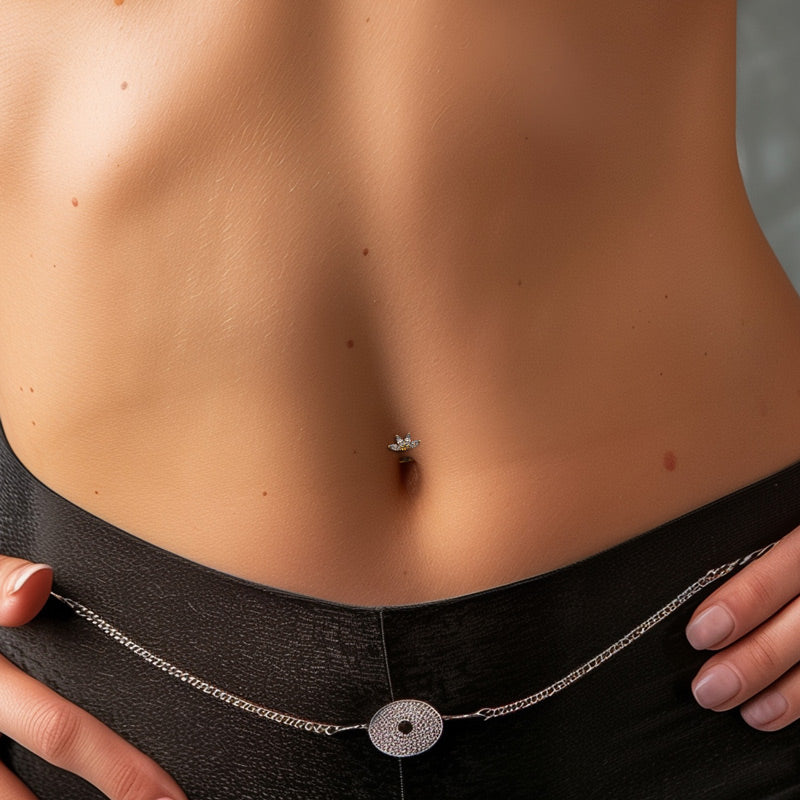
Experience the modern evolution of belly jewelry with floating navel rings—designed to sit flush against the skin for a sleek, barely-there look. Unlike traditional curved barbells, floating navel rings place the decorative top forward-facing, creating the illusion that it’s effortlessly resting on your navel.
Handcrafted from hypoallergenic, solid 14k gold, our floating navel rings pieces offer a refined, comfortable fit while beautifully showcasing diamonds, sapphires, or other fine gemstones.

Related Jewelry



Belly Piercing Collections



Related Stories
Body Jewelry Materials
Learn about our precious metals and jewelry quality.
Cartilage Piercings & Jewelry Guide
Everything you need to know about helix, tragus, rook and other cartilage piercings.

The Nose Piercing: Everything You Need To Know
Discover the perfect style of jewelry for your nose piercing.