PageContent
Nose Piercing Guide: Pain, Healing & Aftercare
From placement to pain level, you'll find all the details here.

Besides ear piercings, the nose piercing is one of the most popular — and one of the few that's widely accepted in professional settings, making it a common choice for people in all walks of life.
But the nose is one of the more demanding piercings to heal. Cartilage is slow to repair compared to earlobes, and the nose is exposed to bumps, snags, skincare products, and constant hand contact every day. Before you book your piercing, it's worth knowing what to expect going in, during healing, and in the months after.
Here's everything you need to know about the nose piercing:
How Bad Does A Nose Piercing Hurt
The nose piercing tends to be more sensitive than other areas of the face, and punching a needle through cartilage can sometimes cause more pain than puncturing softer skin, like the earlobe. However, most people who have their nose pierced reported less pain than they expected. Getting your nose pierced is only slightly more painful than getting your cartilage pierced.
Any pinch you might feel will be quick. Many claim that the most unnerving part of the process is not the pain, but the fact that the needle will be directly in your face as the nose is punctured. It’s recommended to close your eyes during the process, especially if you have a fear of needles.
After you get your nose pierced, you might discover that you can see your jewelry in the corner of your eye, or your brain might register the jewelry as a nagging itch. Eventually, your brain will get used to the piercing, but until then, try not to absentmindedly pick at or scratch your new jewelry; it’s easy to rip nose studs out of the piercing, which can be incredibly painful, especially if your piercing is fresh.
Fun Facts about nose piercings

Nose Piercing Healing Process
The nose piercing takes around 3 – 4 months to fully heal. Talk to your piercer before stopping aftercare practices or changing your jewelry. Healing times vary from person to person, and the interior of the piercing often takes longer to heal than the exterior.
Since the nose is such a prominent facial feature, you'll notice new jewelry more than with other piercing placements — it's important to refrain from touching or moving it as it heals.
Cartilage is harder to heal than fleshier tissue. Its brittle nature and prolonged healing times make it susceptible to complications like piercing bumps. Keep your piercing away from snags and irritants — face wash, makeup, moisturizer, and sunscreen all cause trouble.
Clean your piercing with a piercing aftercare saline solution 2 – 3 times daily per your piercer's instructions. The solution should only contain salt and water — additives like tea tree oil will irritate the piercing and can prolong healing.
Your Starter Jewelry
Your piercer will start you with jewelry sized to let your piercing heal cleanly. The standard starter gauge is 18G or 20G, though your piercer may use a slightly larger needle (up to 16G) to leave healing room. Never downsize smaller than your piercer recommended — going thinner raises the risk of rejection, tearing, and migration.
Wearable length on starter nose studs is typically 1/4-inch to accommodate swelling and give the piercing room to be cleaned. If you're pierced with a captive bead ring, hoop, or circular barbell instead, starter diameter is usually 5/16-inch or 3/8-inch.
Wait until your piercer clears you before you swap to a different size. Swapping too early — or to a piece that's too thin or too short — is one of the most common causes of piercing bumps and migration.
Here are some aftercare tips unique to the nose piercing:
Don’t touch the jewelry. Spinning, scratching, or moving the jewelry can cause trauma to the surrounding skin that can lead to scarring, piercing bumps, and other unsightly issues. Cartilage is particularly susceptible to damage, so you need to be extra sure that you leave your jewelry alone as it heals.
Keep makeup and other face products away from the piercing. The only product or solution that you should introduce to your nose piercing is saline solution. Soap, makeup, and lotions contain chemicals that can irritate your piercing.
Nose piercings close quickly. If your jewelry falls out as your nose piercing is healing, visit your piercer immediately to get the jewelry replaced.
Why Shouldn’t I Get A Nose Piercing?
The aesthetics of this piercing really depends on the anatomy of your nose. The nose piercing can be placed anywhere on the nose, but it’s most typically placed in the crease of the nose where the cartilage is thinnest. From there, you and your piercer can decide the optimal location to best complement the shape of your nose.
If your nose crease is particularly pronounced, it might be difficult to find jewelry that will fit comfortably. You can talk to your piercer about options, or you might want to consider another jewelry option.
Blowing your nose can be especially difficult during healing. It will hurt to press the tissue against the new piercing as you blow your nose, and snot and boogers can get caught in the jewelry. If you tend to get allergies, then you’ll want to wait until allergy season is over to get your piercing.
Nose Piercing Cost
Nose piercings are among the more affordable piercings, though actual cost depends on the studio and location. The location of the nose piercing is incredibly important; a misplaced nose piercing can completely change the aesthetic of your nose. You want to opt for an experienced piercer who has an eye for piercing location. While the location of your piercing is ultimately up to you, it’s best if you have a piercer who can give you advice that you can rely on.
Always choose a piercer who uses a needle over a piercing gun. Piercing guns harbor bacteria and use blunt force to puncture the piercing. In any piercing, it’s important to use a needle, but it’s even more important in any cartilage piercing since the blunt force can cause permanent damage to the pierced area.
Often, you will have to pay for the jewelry on top of the piercing. While options like steel are cheaper, you want to choose more expensive jewelry options, like 14k gold or platinum. Even if you’ve never had sensitivities to metal, a fresh piercing could trigger sensitivities, so it’s best to choose metals that won’t agitate your skin as it heals.
FreshTrends Tips
Piercing fully healed? See every style of nose ring in our nose piercing jewelry guide → — hoops, studs, L-shapes, screws, and more in 14k gold, titanium, and platinum.
Nose Piercing Variations
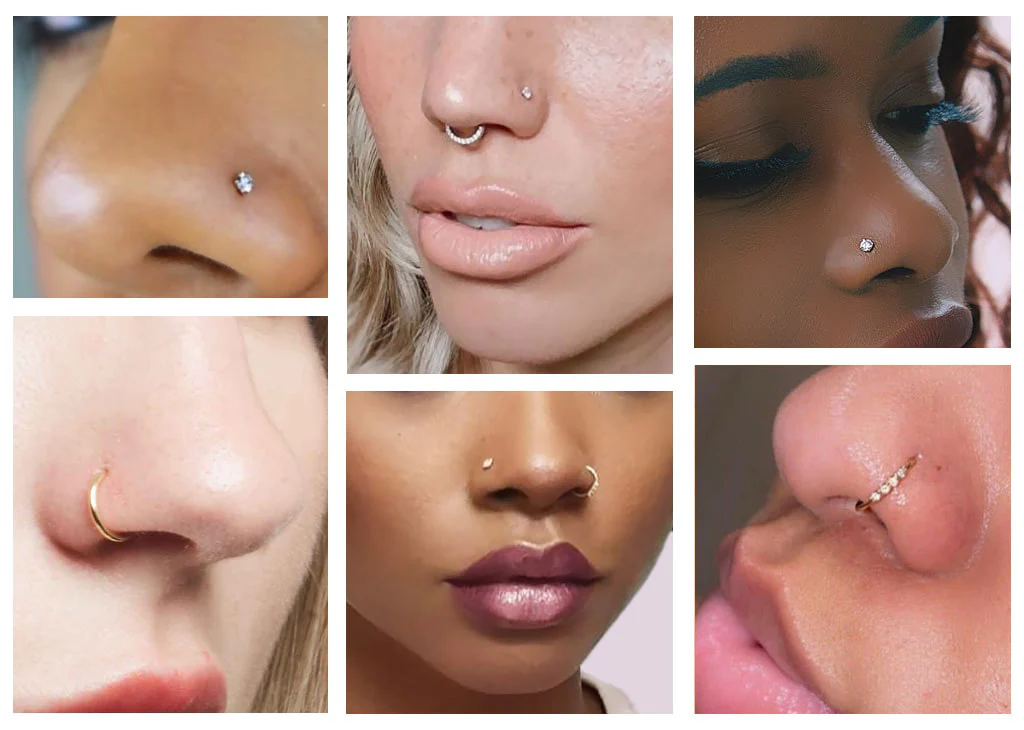
The double nose piercing is slowly gaining popularity. As the name implies, it consists of two nose piercings located next to each other along the crease of the nose. People with this piercing often opt for two small nose studs, often with sparkly diamonds or other gemstones, or two seamless hoops.
Related Stories

Choosing The Perfect Diamond Nose Ring
How to pick diamond cut, setting, and size for your nose piercing.

The Septum Piercing: Pain, Healing, And Cost
Placement, pain level, healing time, and aftercare for the septum piercing.

Types of Nose Jewelry: Hoops, Studs, Screws & More
Every style of nose jewelry, with sizing guidance and shop links for each type.