PageContent
Piercing size guide
How do I know what size
my body piercing is?
Almost nobody knows their gauge. That is normal — most people are never told. Piercing jewelry comes in sizes the way shoes do, and the wrong one will not sit right no matter how beautiful it is. This page gets you to the right numbers in about a minute.
Not sure? Our Piercing Advisors will confirm your size, free
- Gauge
- The thickness of the bar or post that goes through your piercing. The one that trips everyone up: a lower number means a thicker bar.
- Length
- How long the bar or post is between the ends. The balls and charms are not counted.
- Diameter
- How wide a ring is, measured across the inside at its widest point.
Made to fit you
Why the right size matters

- Too long
- Moves around, creating friction, discomfort, and irritation, and can snag on clothing or hair.
- Too short
- Can press in, causing pressure, swelling, and irritation.
- Made to fit
- Sits flush and still, for less friction every day.
- The result
- More comfort for a healthy piercing, and a piece you never take off.
Gauge
Lower number, thicker bar.
Gauge runs backwards. A 20G nose stud is finer than a 14G navel barbell, even though 20 is the bigger number. Here is what the common gauges actually look like next to each other.
Shown to relative scale — not actual size, which depends on your screen
Start here
Tell us the piercing. We’ll tell you the size.
These are the industry-standard sizes professional piercers use. Bodies differ and so do piercers — if your piece has never fitted quite right, the note under each one says what usually causes it.
Choose your piercing
Belly button
Navel · Surface
- Standard gauge
- 14G
- Standard length
- 3/8"and 7/16"
Reference
Piercing size chart: standard gauge and length for every piercing
Everyone’s body is different, and piercers use different lengths and gauges depending on your anatomy and the jewelry you want to wear. These are the standard gauges and lengths used by professional piercers — we cannot guarantee they are what was used for your piercing. If you are unsure, ask your piercer.
Show the full size chart
| Piercing | Standard gauge | Standard length |
|---|---|---|
| Belly button / navel | 14G | 3/8" (9.5mm), 7/16" (11mm) |
| Nose | 20G, 18G | 1/4" (6mm), 5/16" (8mm) |
| Tongue | 14G | 5/8" (16mm) |
| Cartilage (helix, forward helix, tragus) | 16G, 18G | 3/16" (5mm), 1/4" (6mm), 5/16" (8mm) |
| Eyebrow | 16G (14G also common) | 1/4" (6mm), 5/16" (8mm), 3/8" (9.5mm)rings 8–10mm inner diameter |
| Industrial | 14G (16G also common) | 1 1/4" (32mm), 1 1/2" (38mm)varies with your ear |
| Labret / lip | 16G (14G also common) | 1/4" (6mm), 5/16" (8mm), 3/8" (9.5mm)3/8" is often a starter length; hoops 5/16"–3/8" inner diameter |
| Monroe | 16G | 1/4" (6mm), 5/16" (8mm), 3/8" (9.5mm)healed; 3/8" is a starter length |
| Nipple | 14G | 3/8" (9.5mm), 1/2" (13mm), 9/16" (14mm) |
| VCH (vertical clitoral hood) | 14G | length varies with your anatomy; follow your piercer’s sizing |
| Rook | 16G (18G for some hoops) | 1/4" (6mm), 5/16" (8mm)curved barbells; hoops 5–8mm inner diameter, 6mm most popular |
| Conch | 16G (14G also used) | 1/4" (6mm), 5/16" (8mm), 3/8" (9.5mm)flat back studs, healed; hoops 10–12mm inner diameter |
| Daith | 16G | 5/16" (8mm)hoops, inner diameter |
| Septum | 16G (14G also common) | 5/16" (8mm), 3/8" (9.5mm), 7/16" (11mm), 1/2" (13mm), 5/8" (16mm)inner diameter |
| Ear lobe | 18G or 20G | 5/16" (8mm)flat back — a butterfly back uses a standard post |
The edit
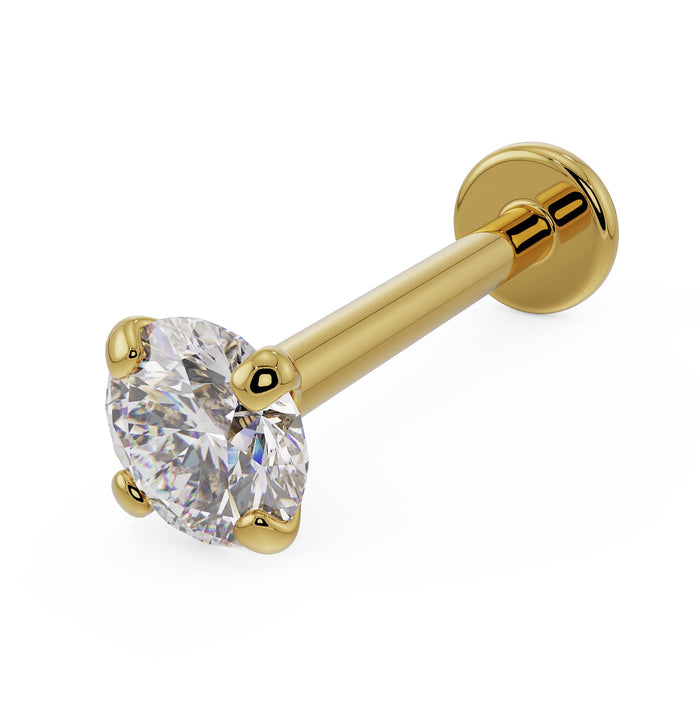
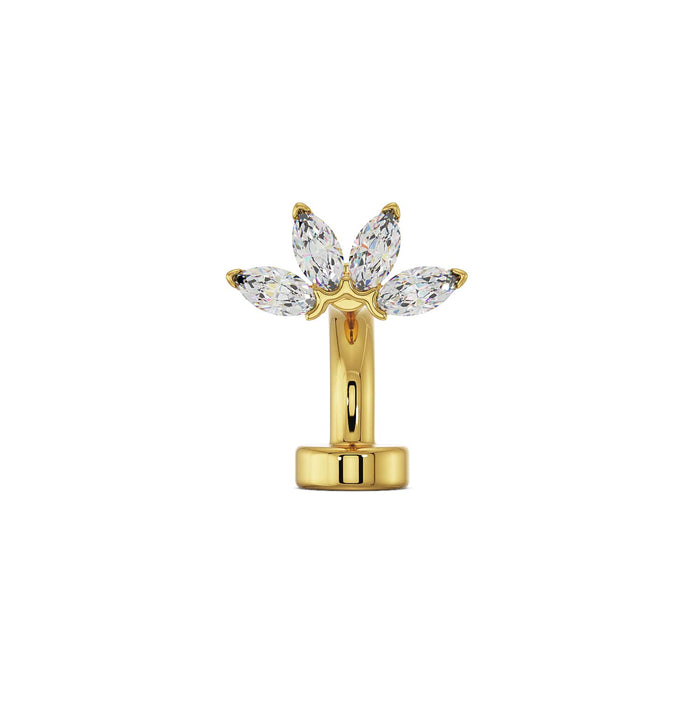
Best Sellers in Solid 14k Gold
The pieces our customers order most, handcrafted in solid 14k gold.
Before you measure
The piece you’re wearing is probably longer than you need.
Piercers fit your first jewelry long on purpose, to leave room for swelling, and it is usually titanium rather than gold. Once you have healed, most people size down, so measuring what you are wearing can lead you to order a size you have already outgrown. The lengths in the chart above are healed sizes. If your jewelry tips sideways, rotates or leaves an indentation, it is too long.
If you already own it
How to measure piercing jewelry
Take the piece out, lay it flat and measure the bar — never the ball or the charm. A caliper is ideal; a ruler with millimeters will get you close enough to order. One caveat first, if the piece you are measuring is the one your piercer put in — see above.

Cartilage · Eyebrow · Lip · Navel · Nose · Septum · Nipple
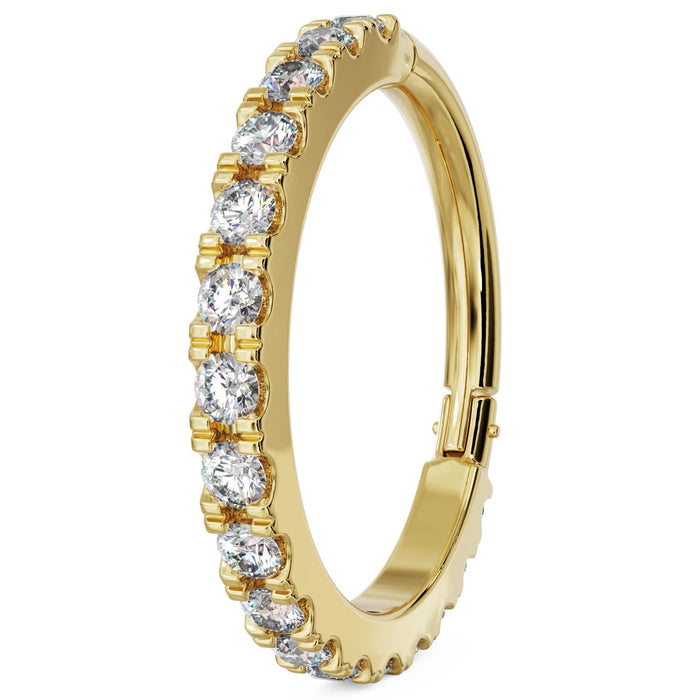
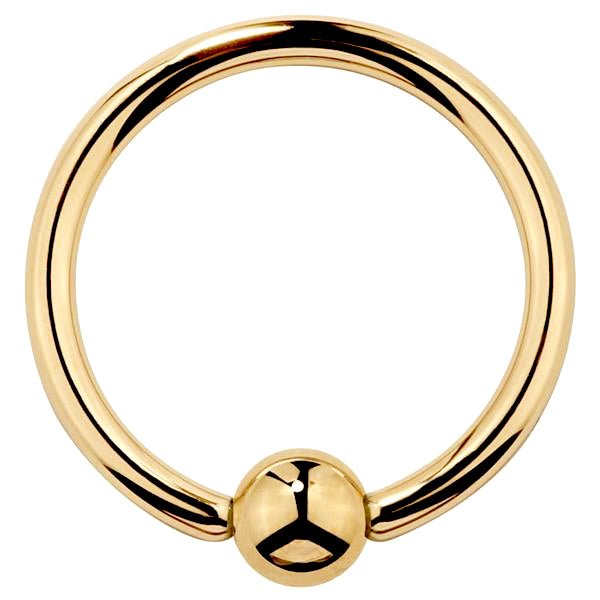
Hoops, captives, seam rings & circulars
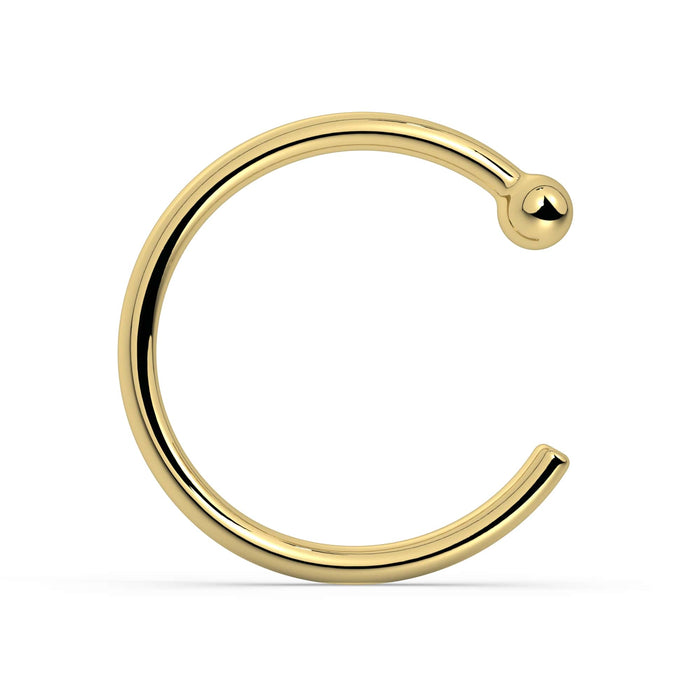
All rings are measured the same way: across the largest inside diameter of the circle. Captive bead rings — also called CBRs, BCRs or closure rings — come in many shapes, but the rule does not change.
Circular and horseshoe barbells are measured the same way. They are commonly worn as belly, septum, nipple and eyebrow rings, as earrings and ear plugs, and in intimate piercings. Ours are handcrafted in solid 14k gold and internally threaded, so nothing rough passes through the piercing.
Which diameter should you buy? Gauge is standard by placement — diameter is not. It depends on how much tissue the ring has to wrap, which is anatomy, not convention. Too small and it presses in; too large and it spins, hangs away and catches. We make hoops from 3/16" (5mm) up to 3/4" (19mm), depending on the style. If you have a ring that already sits well, measure that one. If you do not, this is exactly what the free Piercing Advisor is for.
The edit
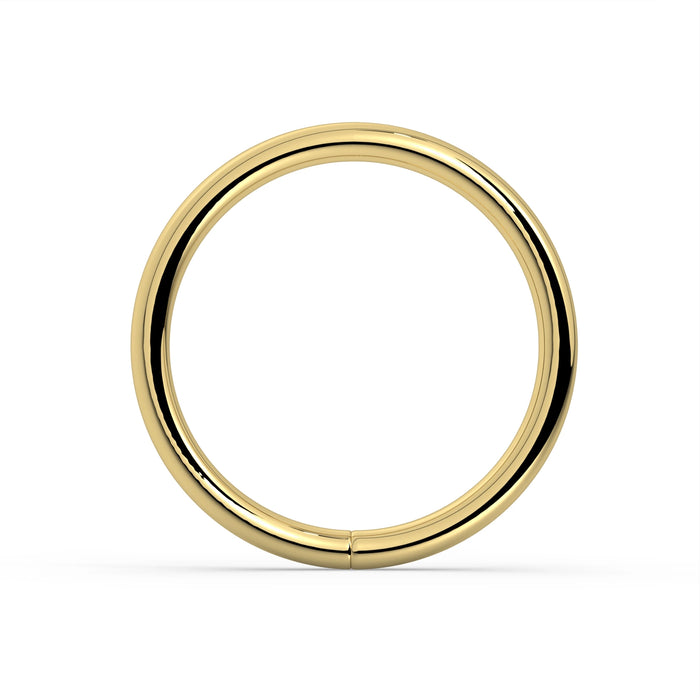
Hoops in Solid 14k Gold
Seam rings, clickers and bead rings, handcrafted in solid 14k gold.

Nipple · Industrial · Cartilage · Tongue
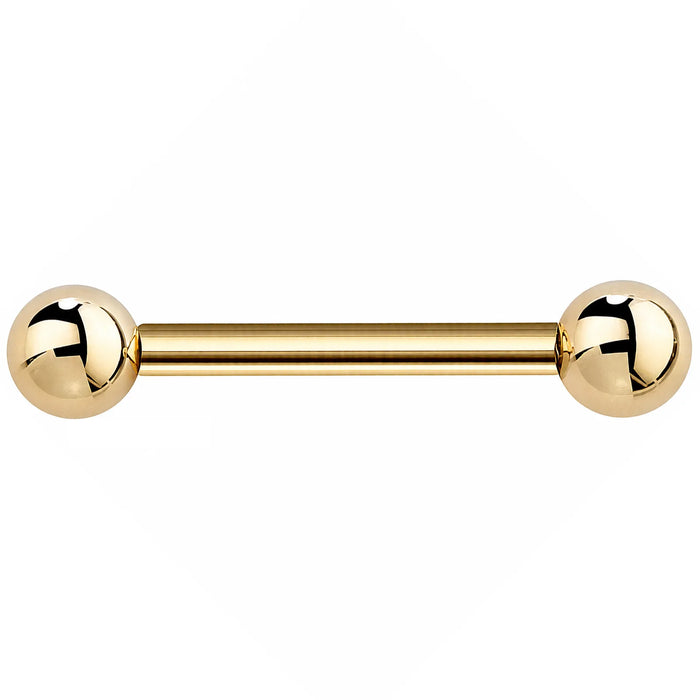
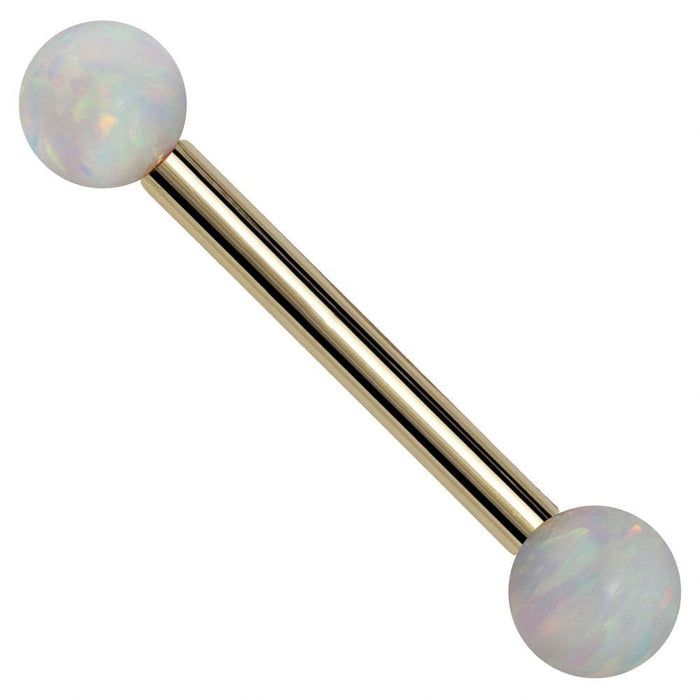
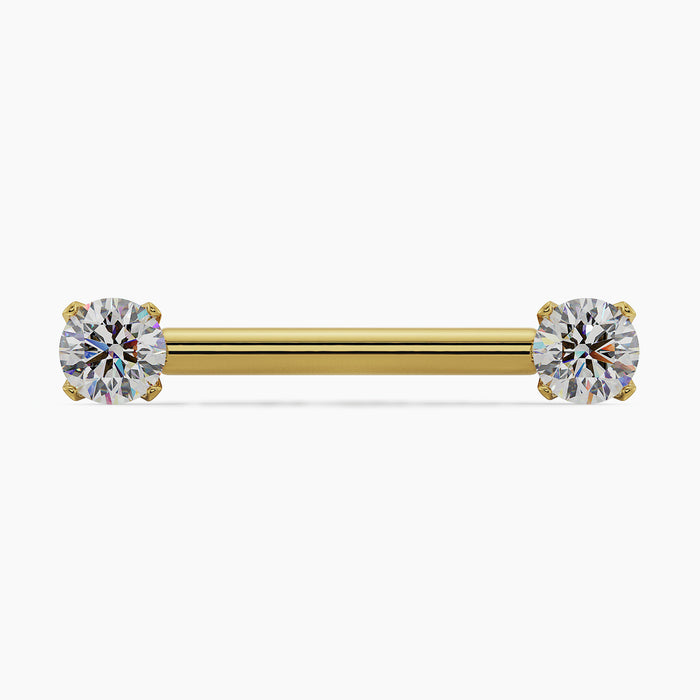
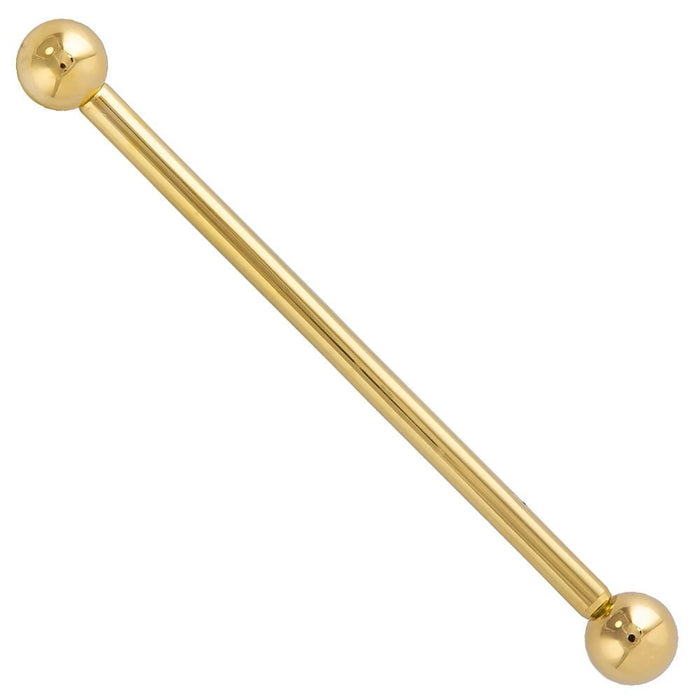
Straight barbells
Measure the bar between the two balls, along its length. The balls themselves are never part of the measurement.
If the barbell presses into the skin or the balls sit buried, it is too short. If it slides and tips, it is too long.
The edit
Straight Barbells in 14k Gold
Classic, opal and cubic zirconia bars, handcrafted in solid 14k gold.

Nostril
Nose rings
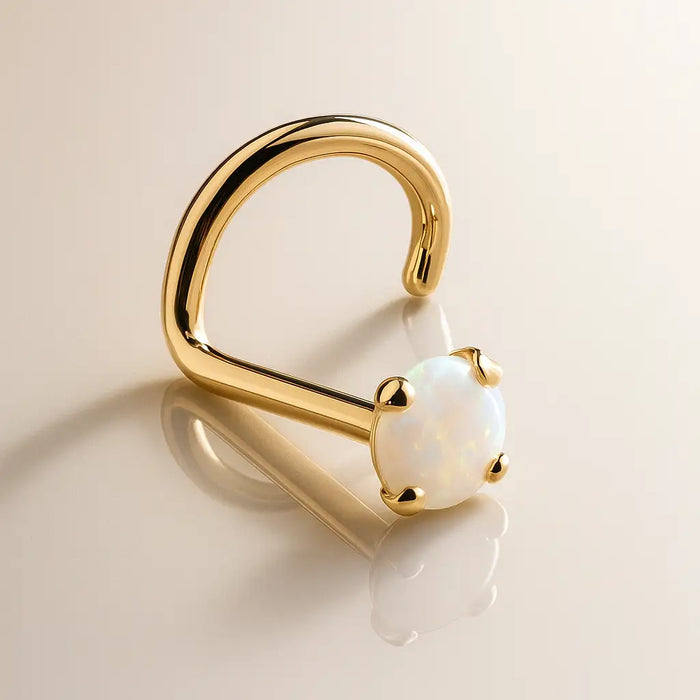
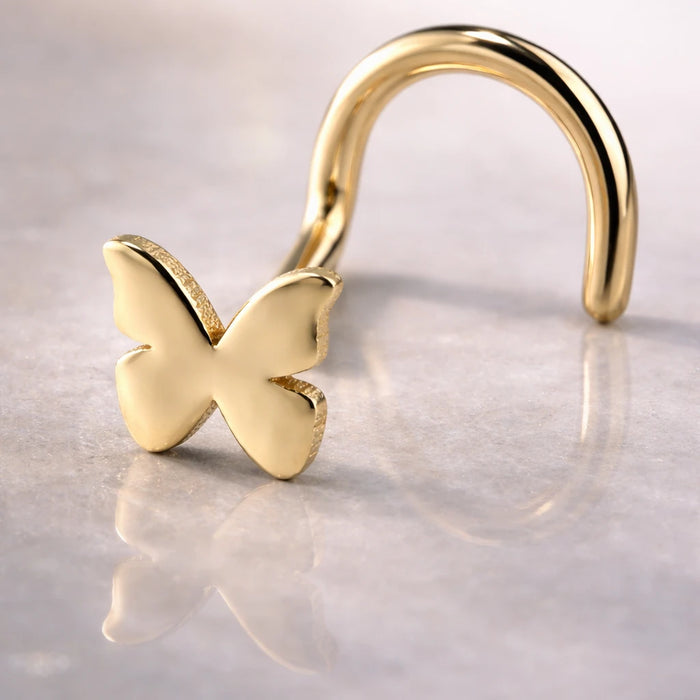
Where you stop measuring depends on the backing. A twist or screw is measured from the base of the stone to where the bend begins. A bone is measured to the end of the shaft, before the beaded tip. A pin post, shown as Straight Post on our product pages, is measured the whole way to the end of the post. Ours have a 3/8" (9mm) wearable length and can be bent to fit.
We make nose jewelry in 18G and 20G, by hand, in solid 14k and 18k gold and platinum.
Nostril
Nose stud backings: how each one stays in
A nostril stud is named for how it stays in, and it changes both how you measure it and how easy it is to put on.

Twist
A corkscrew post that spirals in. The most secure of the post styles, and the fiddliest until you are used to it.

L-shape
Also called an L post: a post with a right-angle bend. Much easier to insert, a little easier to lose.

Bone
A straight post with a small bead at the end that holds it in. Very secure, and best in a fully healed piercing.

Pin post
Also called a straight post: a straight post held by friction. Simple to insert, and the flattest against the nose.

Flat back
The same flat disc used in ear piercings, worn in the nostril. Nothing protrudes inside the nose, which makes it a comfortable one to sleep in.
The edit
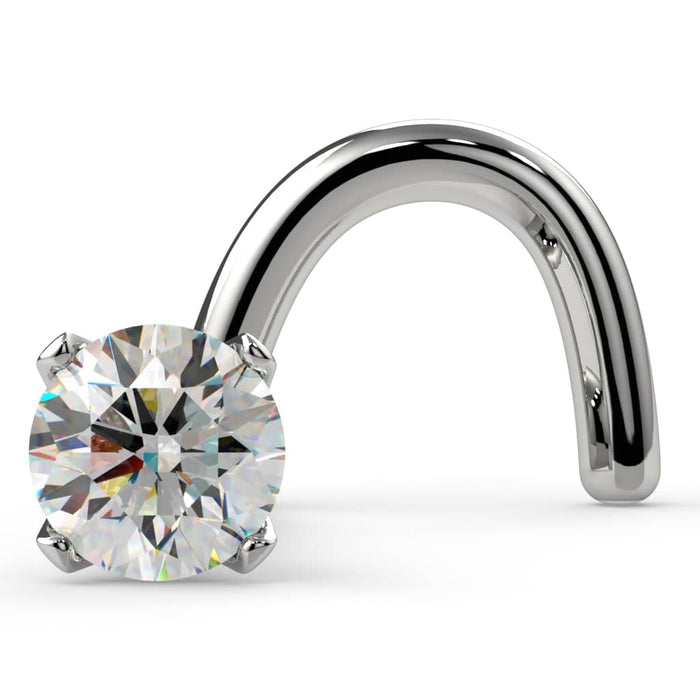
Nose Rings in 14k Gold
Studs, hoops and gemstone styles in 18G and 20G, handcrafted in solid 14k gold.

Lobe · Helix · Conch · Tragus · Labret · Nostril
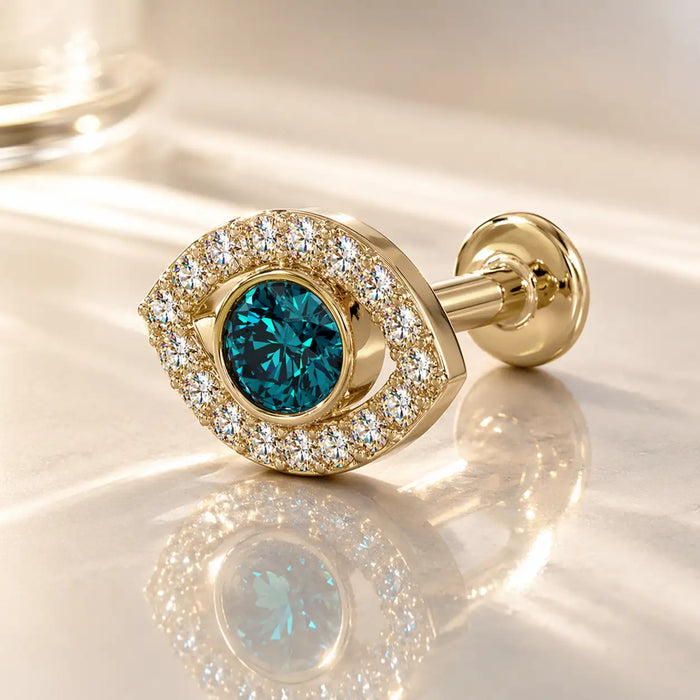
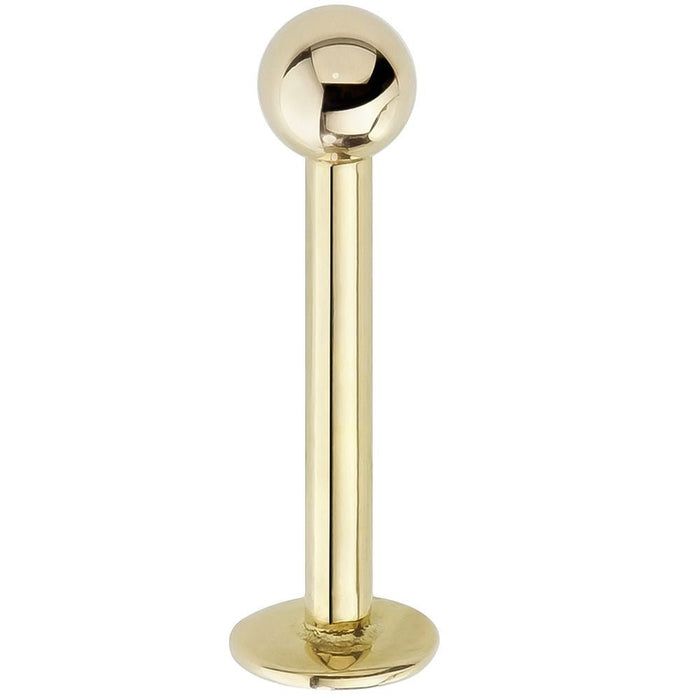
Flat back studs
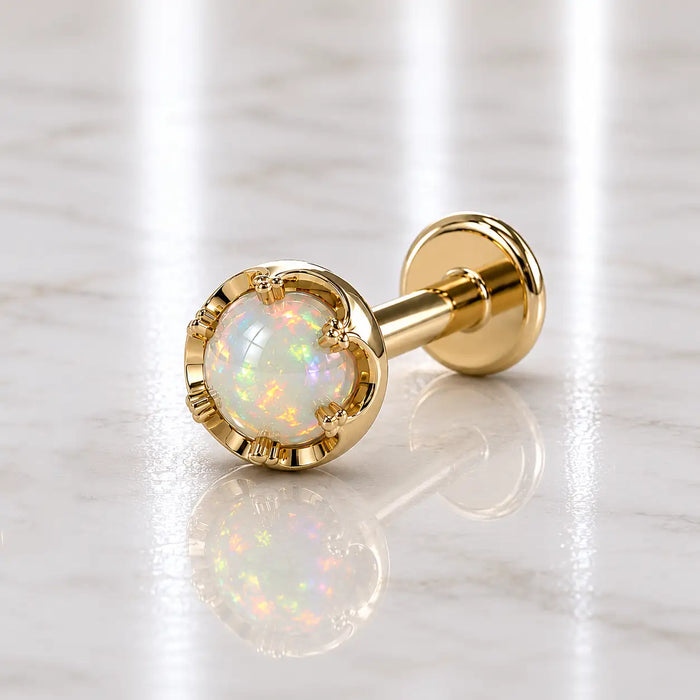
Measured from the base of the stone to the top of the flat disc. Standard lengths are 1/4" (6mm) and 5/16" (8mm); 3/16" (5mm) is a snug length, usually kept for cartilage rather than lip.
The flat disc is what makes these comfortable to sleep on, which is why they have become the default for ear stacks.
Watch
How to find your perfect earring length
The length of your piercing jewelry is the wearable length of the post that goes through your piercing. This 17-second clip shows what that looks like on the ear.
The edit
Flat Back Studs in 14k Gold
Diamond, opal and ball ends, handcrafted in solid 14k gold.

Rook · Daith · Eyebrow · Navel · Nipple · Intimate
Curved barbells
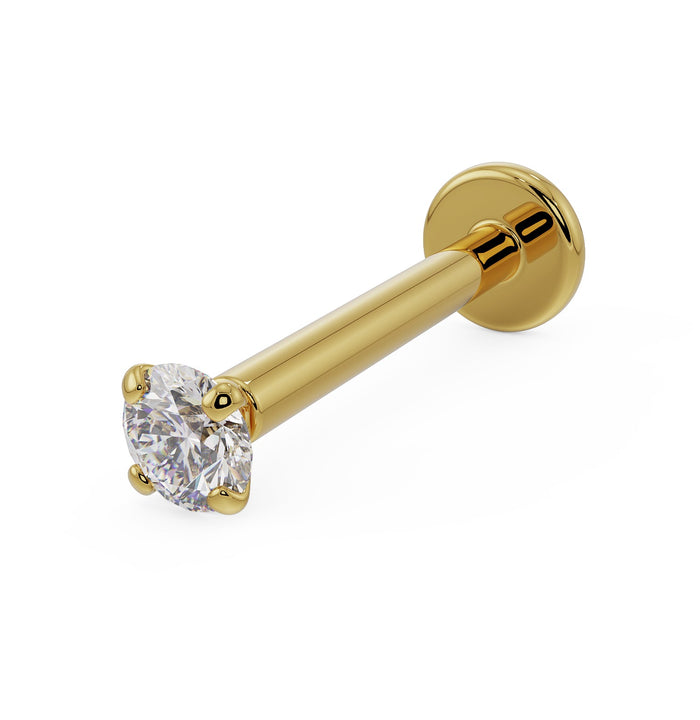
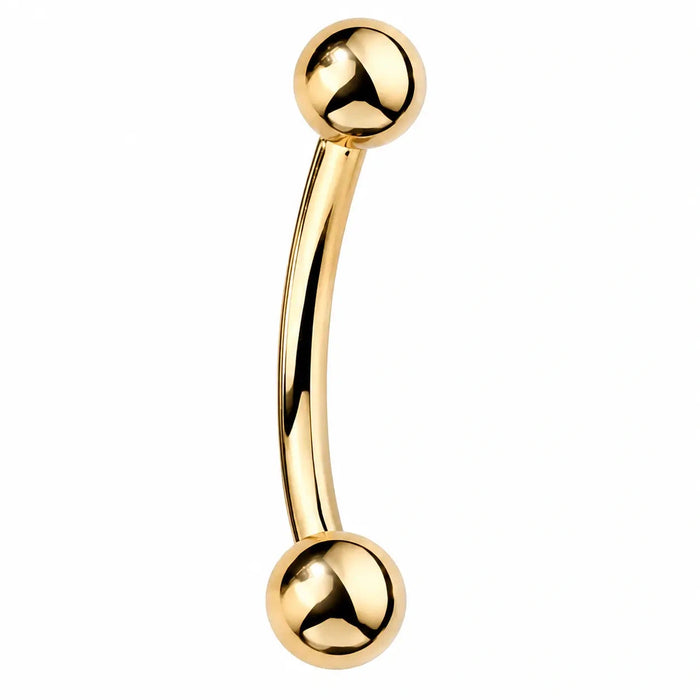
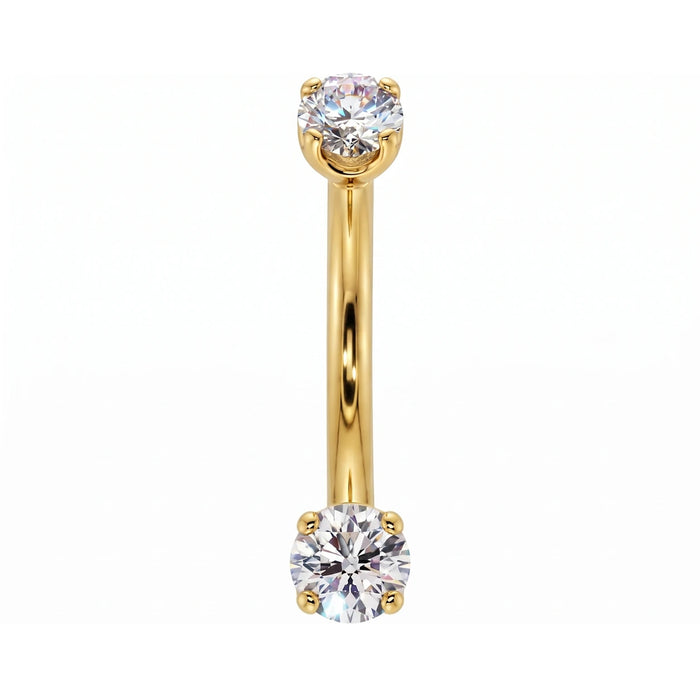
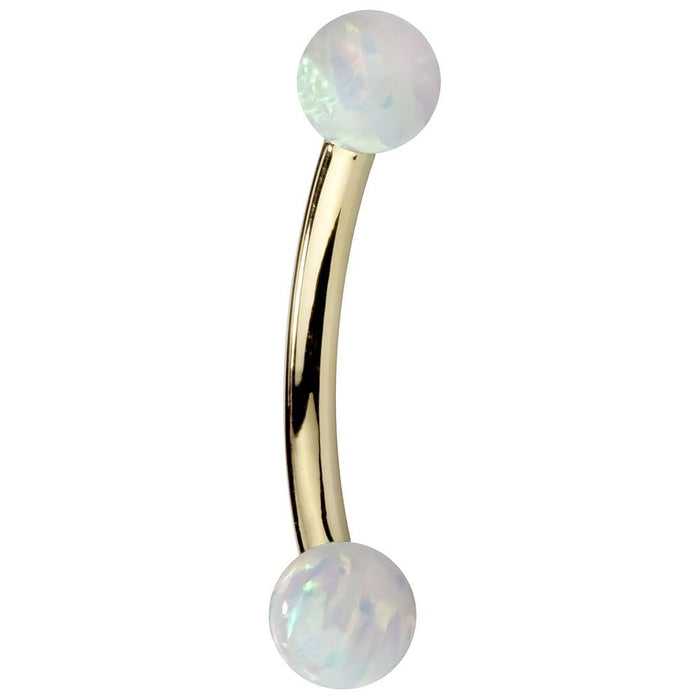
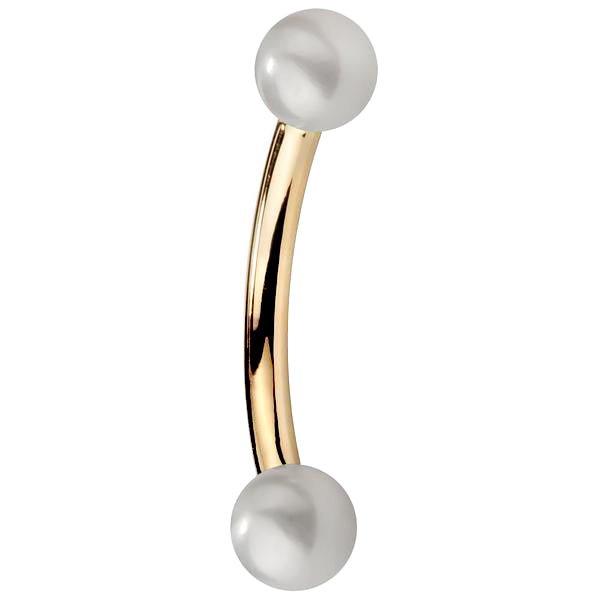
Also called bent barbells. Measured in a straight line between the two balls — not around the curve. That catches people out: measure around the curve and you will order one that is too long.
They are used wherever a straight bar would sit awkwardly against the anatomy.
The edit
Curved Barbells in 14k Gold
Plain, diamond, opal and pearl ends, handcrafted in solid 14k gold.

Stretched lobes
Plugs & tunnels
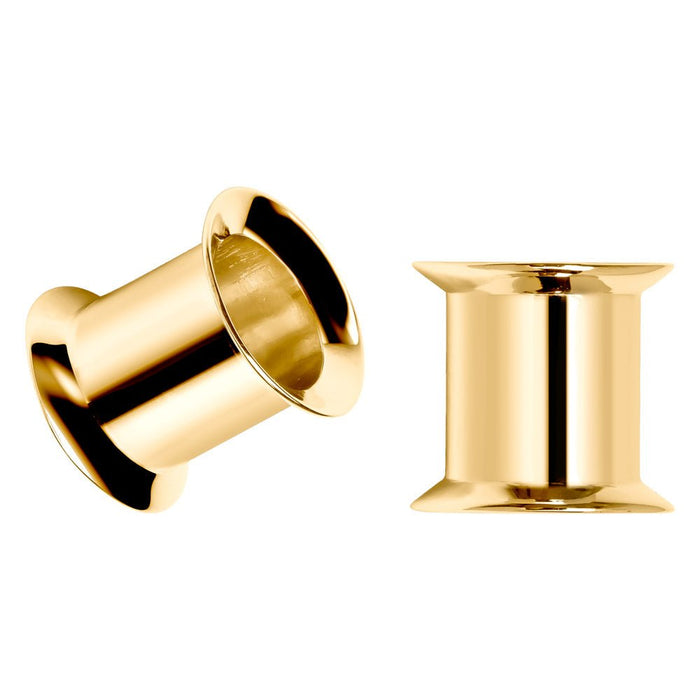
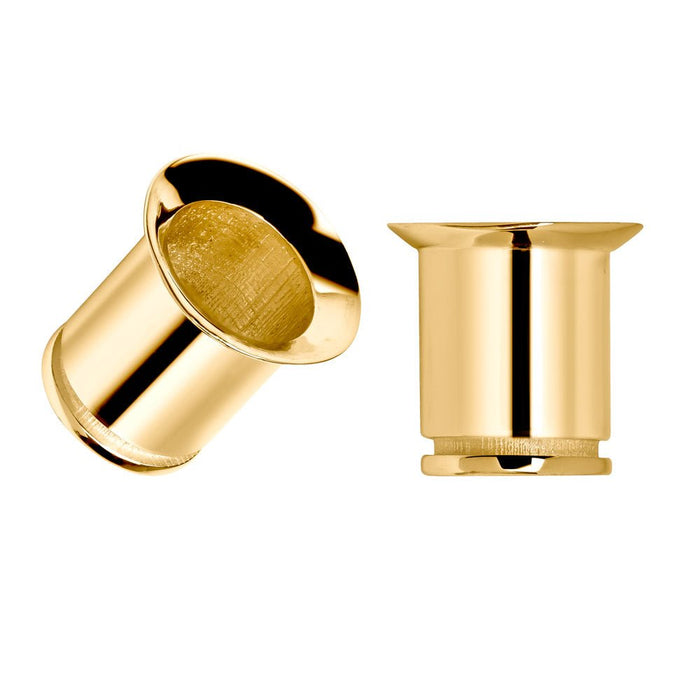
Plugs and tunnels are sized by gauge, the diameter of your stretched piercing. A plug is solid and a tunnel is hollow so you can see through it; both are measured the same way.
There is no standard plug size, because it depends entirely on how far your lobe has stretched. Match the gauge to your current size, and never skip sizes when stretching. The wearable area is the length of the barrel between the flares. It should match the thickness of your lobe so the plug sits flush without pinching. If you already own one that fits, measure that.
The edit
Plugs & Tunnels in 14k Gold
Single and double flare tunnels, handcrafted in solid 14k gold.
Conversions
Piercing gauge chart: gauge to inches and millimeters
Piercing jewelry is sold in gauge and inches in the US and in millimeters almost everywhere else. These are the conversions.
Gauge to inches & millimeters
The thickness of the bar.
| Gauge | Inches | Millimeters |
|---|---|---|
| 22G | 0.025" | 0.64mm |
| 20G | .032" | 0.81mm |
| 18G | .040" | 1.0mm |
| 16G | .050" | 1.2mm |
| 14G | .064" | 1.6mm |
| 12G | .082" | 2.0mm |
| 10G | .102" | 2.5mm |
| 8G | .125" | 3.0mm |
| 6G | .162" | 4.0mm |
| 4G | .204" | 5.0mm |
| 2G | .250" | 6.0mm |
| 0G | .312" | 8.0mm |
| 00G | .375" | 10.0mm |
Length & diameter conversion
The length of a bar, or the diameter of a ring.
| Inches | Millimeters |
|---|---|
| 3/16" | 5 |
| 1/4" | 6 |
| 5/16" | 8 |
| 3/8" | 9.5 |
| 7/16" | 11 |
| 1/2" | 13 |
| 9/16" | 14 |
| 5/8" | 16 |
| 3/4" | 19 |
| 7/8" | 22 |
| 15/16" | 24 |
| 1" | 25 |
| 1 1/4" | 32 |
| 1 1/2" | 38 |
Piercing Advisor™
Still not sure? Don’t guess.
Add the free Piercing Advisor to your order at checkout. We will get in touch with you after you place your order to confirm the perfect fit, and we hold off crafting the piece until your size is settled. If it still needs altering, the alteration is on us.
The part nobody explains
How it fastens matters as much as how it fits.
Two pieces can be the same gauge and the same length and still feel completely different going in. This is the vocabulary you will see on product pages.
Internally threaded
The screw thread sits inside the bar and the end screws into it. The surface that passes through your piercing is completely smooth. It is more work to make, and it is what we use.
Externally threaded
The thread is cut into the outside of the bar, so it drags through the piercing every single time you put the piece in or take it out. Quicker and less costly to manufacture, and rough on the tissue it passes through — a common cause of irritation in a piercing that was otherwise healing fine.
We do not make externally threaded jewelry, in any piece, in any placement.
Threadless
No screw at all. The decorative end has a small bent pin that holds by tension. Quick to change once you have the knack, which is why ear stacks have gravitated to it.
Common questions
Sizing, answered
What gauge is my piercing if nobody told me?
Go by the placement. Most nostrils are 20G or 18G, most cartilage is 16G or 18G, and navels, nipples and tongues are usually 14G, and septums are usually 16G (14G is also common). The chart above lists the standard for every common piercing. If you still have the jewelry you were pierced with, measuring the bar is the surest answer.
Why is a lower gauge number thicker?
Gauge is an old wire-measuring scale where the number counts how many times the wire was drawn through a die — more passes, thinner wire, higher number. It is counterintuitive but it is the standard, so 14G is noticeably thicker than 20G.
Do I include the ball when I measure length?
No. Length is the wearable bar only, from end to end, without the balls or charms. A curved barbell is measured in a straight line between the ends rather than around the curve.
Can I wear a different gauge than I was pierced at?
You can usually go thinner, though the piercing may start to tighten, so going back up to the original gauge can be uncomfortable. Going thicker means stretching, which should be done gradually and never in a healing piercing. Ask your piercer before changing gauge.
My jewelry fits but looks wrong. What is off?
Usually the length rather than the gauge. Too long and the piece tips, rotates or catches; too short and it presses into the skin and leaves indentation marks. Both are worth correcting — pressure is what causes irritation bumps and migration.
Should I order the same size my piercer used?
Usually not. Initial jewelry is fitted long to allow for swelling, and it is normally titanium rather than gold because it was always meant to be changed. Once you are healed, most people need something shorter — the lengths in the chart above are the healed sizes. If you are unsure, our Piercing Advisors will check the fit for you before we make the piece.
What gauge is a belly button piercing?
Most navel piercings are 14G, which is 1.6mm thick. The standard healed length is 3/8" (9.5mm) or 7/16" (11mm). The finder and the chart above show the sizes for every other piercing.
What gauge is a nose piercing?
Most nostril piercings are 20G (0.81mm) or 18G (1.0mm), in a 1/4" (6mm) or 5/16" (8mm) length. Which backing you choose changes where you stop measuring — see how to measure nose jewelry above.
What size lip ring (labret) do I need?
Most lip piercings are 16G (1.2mm), and 14G (1.6mm) is a common thicker option. Healed lengths are usually 1/4" (6mm) or 5/16" (8mm); a longer bar is often used at first while swelling settles. Length is the bar only, end to end, without the ball or disc. For a hoop, it is the inner diameter, usually 5/16" to 3/8".
Is 14G or 16G thicker (bigger)?
14G is thicker (bigger). A lower gauge number means a thicker bar: 14G is 1.6mm and 16G is 1.2mm, and 18G (1.0mm) is thinner than both. The gauge chart above lists every size from 22G to 00G in inches and millimeters.
What if I measure wrong?
Add the free Piercing Advisor to your order at checkout. We will get in touch with you after you place your order to confirm the perfect fit, and we hold off crafting the piece until your size is settled. If it still needs altering afterwards, we cover it — the Advisor has to be added at the time of your original purchase to be eligible.
Piercing guides
A guide for every piercing
Healing, jewelry and sizing, piercing by piercing. For more on how sizing works, read our guides to piercing jewelry gauge sizes and measuring lengths and diameters, or see our custom-made piercing jewelry.
Fresh Trends
Leaders in making fine piercing jewelry
Our story
Fresh Trends was founded in 2003 in Palm Beach, Florida, when online shopping was still new and high-quality piercing jewelry was hard to find. What began at a dining room table has grown into a brand known for fine, handcrafted gold jewelry made to fit beautifully and last a lifetime.
5 reasons why
Customers from around the world return to Fresh Trends not only for our one-of-a-kind designs, but for our integrity — from sustainable materials and ethical practices to meticulous craftsmanship and personal service.
Handmade in the USA
Every Fresh Trends piece is handcrafted in the USA by expert jewelers who specialize in fine body jewelry. When you choose our jewelry, you’re choosing precision, artistry and a legacy of craftsmanship built to last.